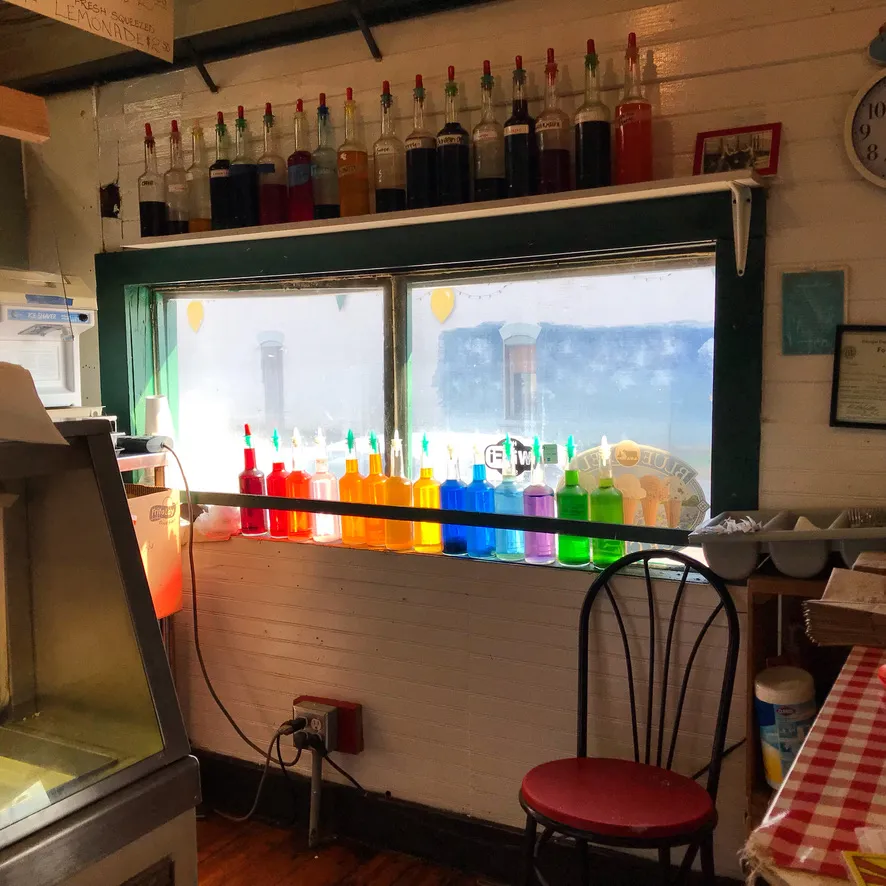
Flavors
History of Snow Cones:
The commercial ice trade that emerged from the American Industrial Revolution in the 1850s set the stage for the snow cone's origins. Ice suppliers in New York regularly shipped large blocks of ice southward to states such as Florida, and along the way, children in Baltimore would eagerly approach the wagons and request small shavings. Their mothers began preparing homemade syrups to flavor the ice, giving rise to the first snow cone topping — egg custard, a simple mixture of eggs, vanilla, and sugar that remains a Baltimore staple to this day.
By the 1870s, snow cones had grown popular enough that theaters began offering them during the warmer months to help keep audiences comfortable. This connection to the theater gave snow cones an air of sophistication, associating them with the upper class. The earliest known physical evidence of snow cones comes from theater signs asking patrons to finish their treat before the second act. At the time, workers used hand-operated shavers to prepare the ice, but by the 1890s, inventors were seeking more efficient methods, leading to patents for electrically powered ice-shaving machines.
Snow cones eventually spread beyond Baltimore during the difficult years of the Great Depression and World War II, largely because they were remarkably inexpensive. Their affordability earned them nicknames like the Hard Times Sundae and the Penny Sunday, and their low production costs made them an accessible small business opportunity. When ice cream grew scarce on the home front during the war, snow cones stepped in to fill the void, becoming a beloved treat across the entire country.
https://www.facebook.com/CabooseRTL/ https://exploregeorgia.org/rutledge/food-drink/diners/the-caboose
Previous |