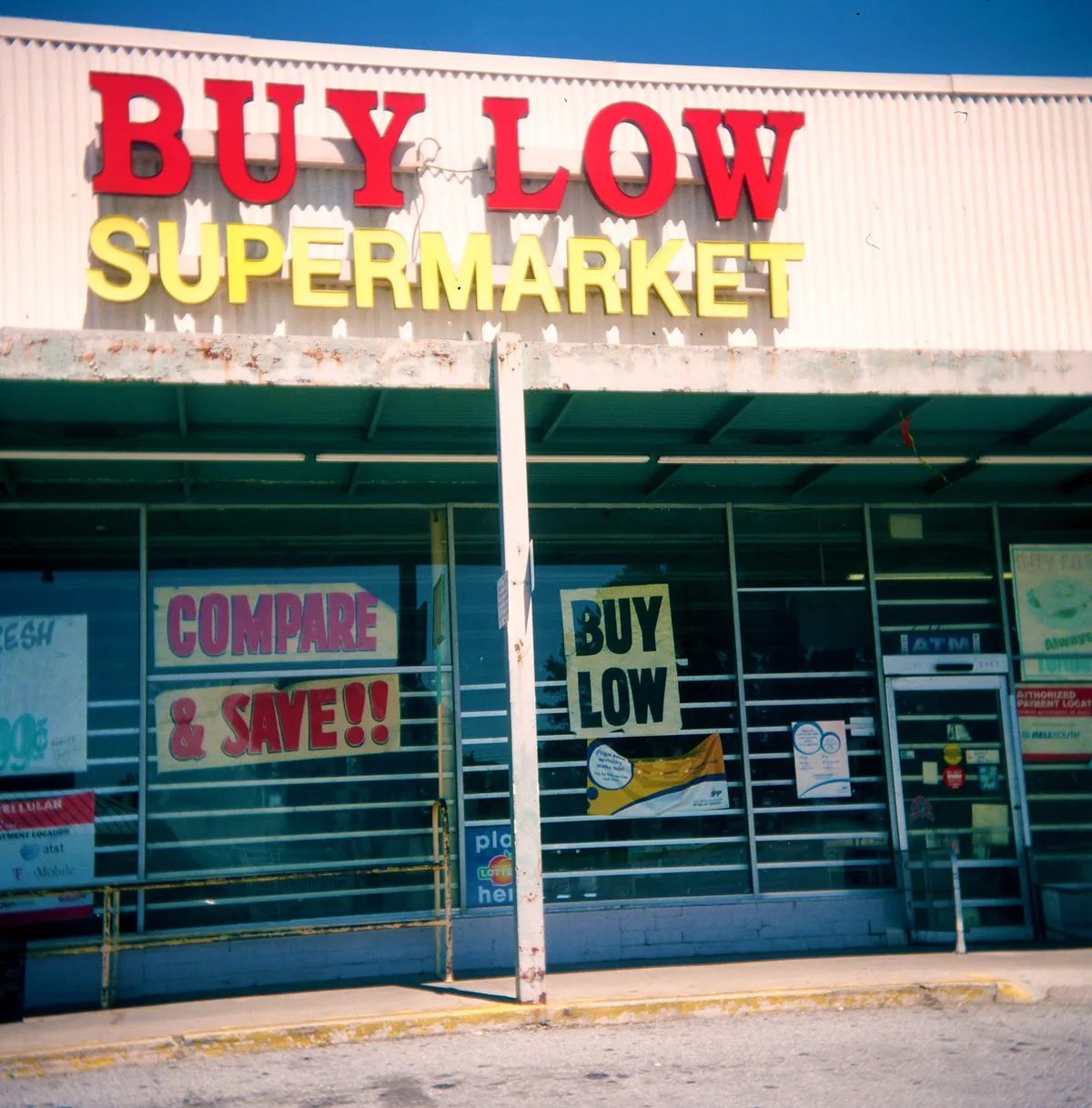
Buy Low
Grocery chains began in the mid-1800s with A&P and similar small regional stores. Stores were tiny, sold only dry/canned goods, and operated separately from butchers and produce vendors. Clarence Saunders' Piggly Wiggly (1916) pioneered self-service shopping.
1920's: Kroger, Safeway, and others expanded rapidly. A&P alone ran over 10,000 stores by decade's end. Mergers became common, eventually drawing antitrust scrutiny.
1930's–40's: Michael Cullen's King Kullen (1930) is credited as America's first supermarket — a large, no-frills, high-volume warehouse store with parking. Major chains eventually adopted the model, consolidating many small stores into fewer, larger ones.
1950's–60's: Chains moved to the suburbs, with flashy new store designs and a booming postwar consumer market. A&P lagged behind and never recovered its dominance.
1970's–80's: A backlash against fancy store amenities fueled a discounting movement. The market split into upscale and warehouse extremes, with the middle gradually disappearing.
1980's–90's: Leveraged buyouts and mergers reshuffled the industry. Walmart and Kmart entered grocery retail, and Kroger, Safeway, and Albertsons emerged as dominant players alongside Walmart.
The present: New players like Whole Foods and Trader Joe’s, and subsequent mergers continue to set trends by carving out distinct identities including organic, ethical, upscale products, and low prices despite hard-to-find, seasonal and curated items that attract customer loyalty.